






















































































































































The OBSBOT Talent 2: What's New? Comparison with OBSBOT Talent
The original OBSBOT Talent made a strong case for replacing a complicated live-streaming setup with a single, portable production studio. It combined video switching, recording, monitoring, encoding and streaming in one compact device.
Now, OBSBOT is taking that concept considerably further with the OBSBOT Talent 2.
At first glance, the Talent 2 might look like a straightforward successor. In reality, the upgrade is much more substantial. It brings a larger and brighter touchscreen, more camera inputs, 4K60 streaming, faster networking, 5G connectivity, increased storage and significantly more recording and production capacity.
So, how much better is the Talent 2 than the original Talent, and which one makes more sense for your production setup?
OBSBOT Talent vs Talent 2: At a Glance
| Feature | OBSBOT Talent | OBSBOT Talent 2 |
 |
 |
|
| Display | 5.44-inch AMOLED | 7-inch AMOLED touchscreen |
| Display resolution | 1920 × 1080 | 1920 × 1080 |
| Display brightness | 350 nits | 800 nits |
| HDMI inputs | 2 × HDMI 2.0 | 4 × HDMI 2.0 |
| USB video inputs | 2 × USB-A + USB-C | USB-A + 2 × USB-C |
| IP sources | Multiple network sources | Up to 10 IP sources |
| Maximum HDMI input | Up to 4K60 | Up to 4K60 |
| Streaming | Up to 1080p60 | Up to 4K60 |
| Simultaneous streaming | 2 destinations | Up to 4 platforms |
| ISO recording | Up to 2 sources | 4-channel ISO |
| Internal storage | 64GB | 128GB |
| Ethernet | Gigabit | 2.5GbE |
| Wi-Fi | 2.4/5GHz | Wi-Fi 6 |
| Mobile connectivity | USB cellular modem | 5G SIM support |
| Bluetooth | 5 | 5.3 |
| HDMI outputs | — | 2 × HDMI 2.0 |
| Battery | 2 × hot-swappable NP-F | 2 × hot-swappable NP-F |
| Weight | Approx. 403g without mount | Approx. 869g without stand |
The original Talent already offered an impressive range of connections, including two HDMI inputs, USB video, NDI, SRT and RTMP sources. It could stream to two destinations simultaneously at up to 1080p60 and included features such as ISO recording, chroma key, graphics, PTZ control and instant replay.
Talent 2 takes almost every part of that specification and increases the headroom.
1. Talent 2 Has a Much Larger and Brighter Screen
One of the first differences you'll notice is the display.
The original Talent features a 5.44-inch 1920 × 1080 AMOLED touchscreen with a rated brightness of 350 nits. That's perfectly usable indoors, but it can become harder to see when you're working in a bright venue.
The Talent 2 moves to a 7-inch 1920 × 1080 AMOLED touchscreen with 800-nit brightness.

That's a meaningful upgrade for live production.
A larger display gives you more room for monitoring sources, managing scenes and controlling your production, while the higher brightness should make the interface considerably easier to see in environments such as conference rooms, studios, events and exhibition spaces.
For operators who spend hours working directly from the device, this could be one of the most practical improvements.
2. Twice the HDMI Inputs Changes the Multicam Possibilities
The original Talent has two HDMI 2.0 inputs, making it possible to build a capable two-camera setup alongside its USB and IP sources.
Talent 2 doubles that to four HDMI 2.0 inputs. It also supports USB and IP video sources, with up to 10 IP sources listed alongside the physical inputs. The published specifications describe a total of up to 17 video sources.
This is a major change for multi-camera productions.
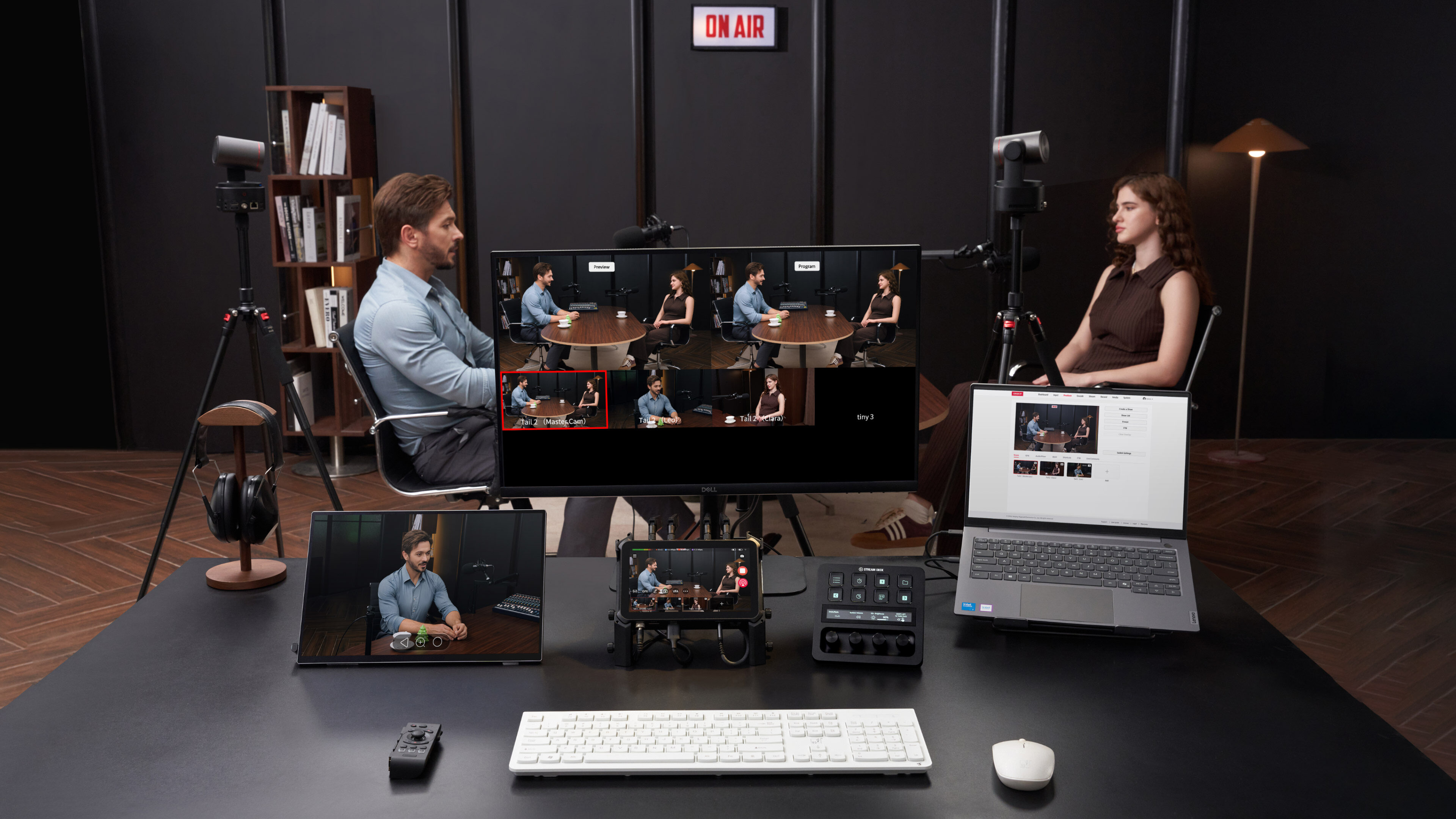
With four HDMI cameras connected directly, Talent 2 is much better suited to:
- Interviews with multiple camera angles
- Podcasts
- Live events
- Church and worship productions
- Corporate presentations
- Educational productions
- Live shopping
- Sports and performance streaming
Instead of having to rely as heavily on network-connected cameras or additional hardware, more cameras can be brought directly into the production system.

3. 4K60 Streaming Is Perhaps the Biggest Upgrade
This is where Talent 2 moves beyond being simply a better version of the original.
The original Talent accepts 4K HDMI sources, but its live-streaming output is limited to **1080p60**. It can stream to two destinations simultaneously.
Talent 2 is designed for 4K 60fps streaming, with published specifications listing 4K60 streaming to up to four platforms.
For creators producing higher-resolution content, this is a substantial improvement.
It means Talent 2 is better positioned for modern workflows where 4K isn't simply something you record for later editing, but something you want to deliver live.
That extra performance should also make Talent 2 more attractive for professional productions where image quality is a priority.
4. More Recording Power with Four-Channel ISO
The original Talent already has ISO recording capabilities, allowing separate sources to be recorded alongside the programme output. However, its published specifications focus on recording two sources simultaneously.
Talent 2 increases this to four-channel ISO recording. It also provides 128GB of internal storage, compared with 64GB on the original model.
That's particularly useful if you're producing content that needs to be edited after the live event.
For example, you could stream a four-camera production while retaining individual camera recordings for a later YouTube edit, social media clips or highlights.
This makes Talent 2 more than just a streaming device. It becomes a much more capable production recorder.
5. Networking Gets a Major Upgrade
Connectivity is another area where Talent 2 has clearly been designed for more demanding production environments.
The original Talent features Gigabit Ethernet, 2.4/5GHz Wi-Fi and support for cellular connectivity through a USB modem. It also includes Bluetooth 5.0.
Talent 2 moves to:
- 2.5GbE Ethernet
- Wi-Fi 6
- 5G SIM connectivity
- USB tethering
- Bluetooth 5.3
For live streaming, network reliability is just as important as video quality.
The move to 2.5GbE provides greater wired network capacity, while Wi-Fi 6 offers a more modern wireless platform. Built-in 5G support is potentially even more useful for mobile productions because it reduces reliance on a separate cellular modem or external networking device.
For event producers who need to stream from locations where a traditional wired connection isn't available, that flexibility could be a major advantage.
6. Talent 2 Adds More Professional Output Options
The original Talent is designed around a compact all-in-one workflow, with USB-C providing display/UVC output and its networking features handling much of the production distribution.
Talent 2 adds two HDMI 2.0 outputs, alongside USB-C output supporting UVC and DisplayPort.
That gives the new model more flexibility when integrating it into a larger production environment.
You can potentially use external displays, monitoring equipment or other video infrastructure without relying on a single output connection.
This is another sign that Talent 2 is aimed at users who are building more sophisticated productions.

7. The Original Talent Still Had One Advantage: Size
Talent 2 isn't simply bigger in terms of capability. It's also physically bigger.
The original Talent measures approximately 147.2 × 90 × 28.5mm and weighs about 403g without its mount.
Talent 2 is approximately 185.2 × 117.2 × 32.8mm and weighs around 869g without its stand.
If you're a solo creator who travels frequently and primarily needs one or two cameras, the smaller Talent would still make a lot of sense.
However, the Talent 2 is better suited to situations where connectivity, inputs and production capability are more important than keeping the equipment as small and lightweight as possible.
OBSBOT Talent vs Talent 2: The Verdict
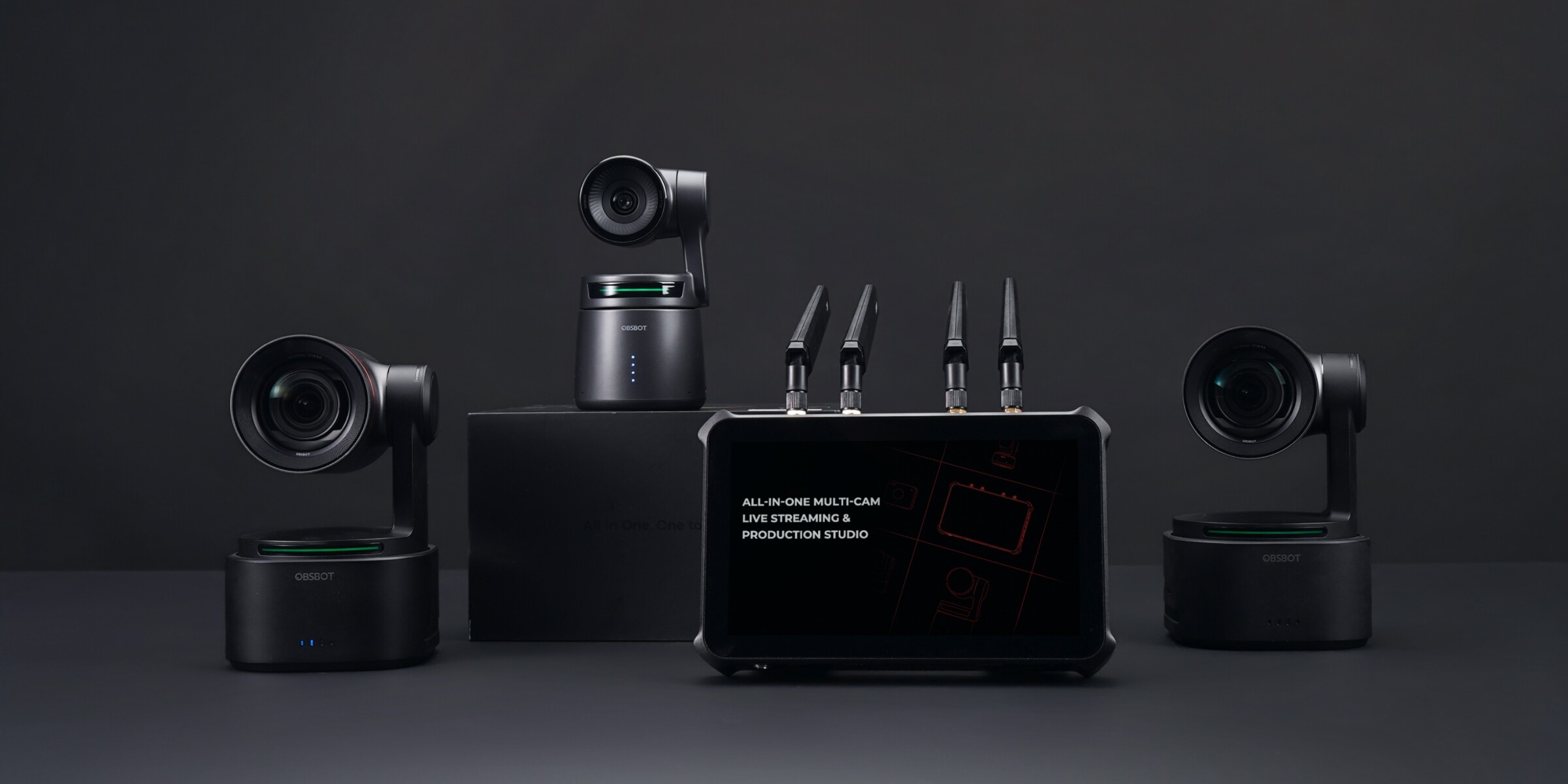
The original OBSBOT Talent was designed around a simple idea: put an entire live production studio into one compact device.
Talent 2 keeps that philosophy but increases the scale.
The biggest improvements aren't cosmetic. You're getting four HDMI inputs instead of two, 4K60 streaming instead of 1080p60, four-channel ISO recording, 128GB of internal storage, 2.5GbE, Wi-Fi 6, 5G connectivity and additional video outputs.
Built for serious multi-camera workflows, the Talent 2 is a major upgrade in many ways and provides a higher-quality result and professional system for livestreaming, content capture, events coverage and live production.
For professional creators, event producers, businesses, educators and production teams, these upgrades could make a significant difference.
The original Talent is the original compact all-in-one studio. But the Talent 2 is the version for creators who have outgrown compact.
Founded in 2016, OBSBOT is an innovative imaging technology and hardware brand dedicated to using new technologies such as AI to inject new vitality into the videography market.
EssentialPhoto & Video is the Official OBSBOT Partner and UK Distributor, stocking the widest range of OBSBOT kit in the UK, offering a 12 Month Warranty*, and Customer Support at our Birmingham-based store. All OBSBOT stock is dispatched from our warehouse in the West Midlands, UK.
